
Whether you are stepping into a pharmaceutical microbiology lab for the first time or overseeing cleanroom environmental monitoring (EM) trends, knowing who your microbial contaminants are is critical.
Historically, identifying a microbe meant waiting days for biochemical reactions and sugar fermentations to change colors. Today, modern regulatory expectations—such as the revised EU GMP Annex 1 and USP <1113>—demand rapid, species-level accuracy to protect sterile products and maintain a robust Contamination Control Strategy (CCS).
Here is a practical, easy-to-understand breakdown of modern identification techniques, their operational limits, and how to apply them in routine QC versus Root Cause Analysis (RCA).
- The Old Way (Phenotypic / Biochemical): Systems like manual API strips or automated cards (e.g., VITEK 2) measure bacterial metabolism. While inexpensive, they require 24–48 hours of growth, struggle with stressed cleanroom isolates (<65% accuracy for common commensals), and cannot reliably identify molds.
- The Routine QC Workhorse (Proteotypic / MALDI-TOF MS): Measures ribosomal proteins using a laser to create an instant spectral “fingerprint” in minutes. High-throughput (up to 96 isolates in ~1.5 hours) with very low consumable costs.
- The Gold Standard for Investigations (Genotypic Sequencing): Analyzes conserved DNA sequences—16S rRNA for bacteria and ITS / D2 LSU for fungi. Independent of metabolic stress, making it the definitive tool for root cause analysis (RCA), sterility failures, and Grade A/B excursions.
1. The Old Way: Phenotypic & Biochemical Methods
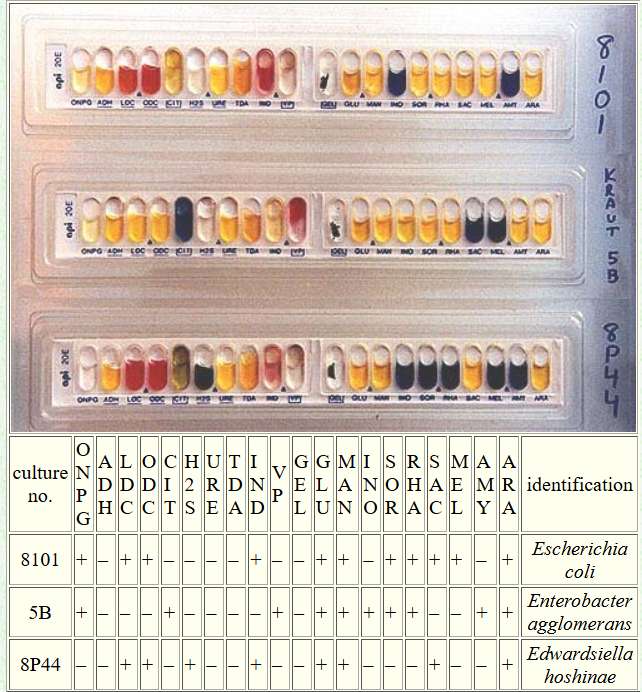
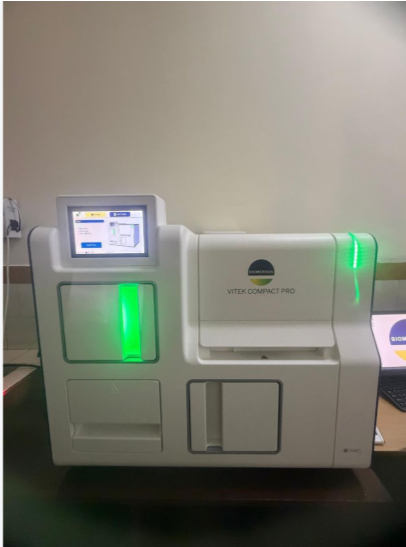
Traditional phenotypic systems—such as manual API strips (Analytical Profile Index) and automated cards like VITEK 2—have been the historical backbone of QC microbiology since the 1970s.
How They Work
An isolate is inoculated into microtubes or microwells containing dehydrated substrates (sugars, amino acids, and pH indicators). If the organism possesses the enzymes to metabolize a substrate, it produces acidic or alkaline byproducts that change the well’s color. The resulting pattern of positive and negative reactions generates a numerical profile matched against a reference database.
Why Pharma is Moving Away from Them
- Mandatory 24 to 48-Hour Delay: Bacteria must physically grow, divide, and metabolize substrates to produce measurable pH shifts. Slow-growing or fastidious cleanroom flora take even longer.
- The “Stressed Cleanroom Microbe” Problem: Microorganisms in cleanrooms are exposed to repeated sub-lethal stress—such as 70% isopropanol, sporicidal disinfectants, and low humidity. Stressed cells downregulate normal metabolic pathways. When tested biochemically, they produce atypical, weak reactions and false negatives. Studies show that card-based phenotypic systems achieve less than 65% accuracy for routine cleanroom skin and environmental commensals like Staphylococcus epidermidis and Micrococcus luteus.
- The Mold Blindspot: Filamentous fungi (molds) grow as branching mycelia rather than uniform single-cell suspensions. Standard biochemical cards and strips are neither designed nor validated to identify molds.
- Subjective Interpretation: Reading manual API strips involves judging whether a well turned reddish-orange or yellowish-orange, introducing analyst-to-analyst variation.
- Regulatory Pressure: Revised EU GMP Annex 1 requires that isolates recovered from Grade A and B cleanrooms be identified to the species level. Because biochemical tests frequently yield ambiguous or genus-only results for stressed flora, relying solely on phenotypic methods introduces serious regulatory compliance risk.
2. The Daily Workhorse: MALDI-TOF Mass Spectrometry
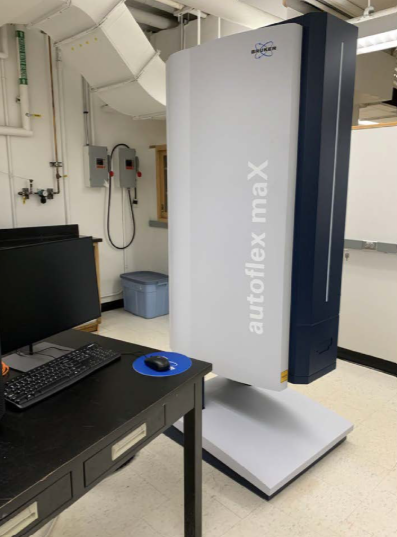
Matrix-Assisted Laser Desorption/Ionization Time-of-Flight (MALDI-TOF) Mass Spectrometry has become the primary identification method in modern pharmaceutical QC laboratories.
How It Works
- Target Spotting: A tiny trace of a fresh colony is smeared onto a spot on a steel target plate.
- Matrix Overlay: An organic matrix chemical is added over the spot to extract cellular proteins and co-crystallize with the sample.
- Laser Ionization: A pulsed UV laser hits the spot under vacuum. The matrix absorbs the laser energy, vaporizing and gently transferring electrical charges to intact cellular proteins.
- Time-of-Flight Separation: Charged proteins are accelerated down a vacuum flight tube toward a detector. Smaller, lighter proteins fly faster and hit the detector earlier than larger proteins.
- Proteomic Fingerprinting: The instrument scans signals across the 2,000 to 20,000 Dalton mass range—dominated by abundant, stable ribosomal proteins. The resulting spectral graph is matched against a reference database in seconds.
Direct Smear vs. Tube Extraction
- Direct Smear: Routine Gram-negative and most Gram-positive bacteria can be spotted directly on the target plate, often with a drop of 70% formic acid to lyse the cell wall.
- Tube Extraction: Yeasts, molds, and spore-formers have thicker, complex cell walls. They require a quick 10-minute benchtop extraction using ethanol, formic acid, and acetonitrile to yield clean, high-intensity protein spectra.
Advantages in Routine QC
- Speed: Delivers an answer in minutes. An entire 96-spot plate runs in approximately 1 to 1.5 hours.
- Low Cost per Sample: Beyond initial instrument capital expenditure, daily consumable costs per test are very low.
- Objective: Algorithmic pattern matching replaces subjective color reading.
3. The Gold Standard: Genotypic DNA Sequencing
Genotypic identification is the ultimate molecular benchmark in pharmaceutical microbiology. By examining stable genetic sequences, identification is completely independent of culture age, media type, or cell metabolic stress.
The Core Targets
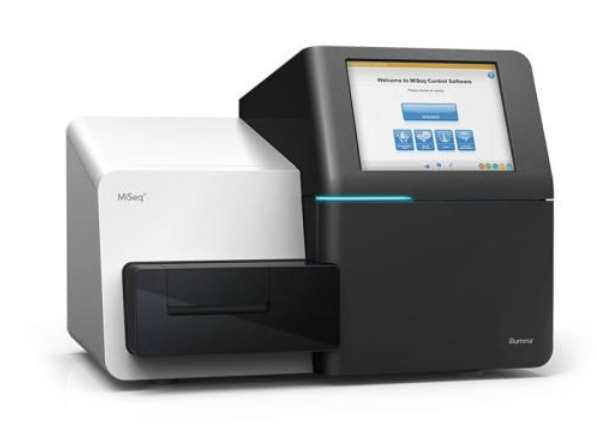
- For Bacteria (16S rRNA Gene): The 16S ribosomal RNA gene is universal in all bacteria (~1,500 base pairs). It contains alternating conserved regions (allowing universal PCR primers to bind) and hypervariable regions (whose unique sequence differences distinguish distinct species). Sequencing either the first 500 base pairs or the full gene provides definitive, audit-proof identification.
- For Fungi (ITS & D2 LSU): Yeasts and filamentous molds are definitively classified by sequencing the Internal Transcribed Spacer (ITS 1 & 2) or the D2 region of the Large Subunit (D2 LSU) ribosomal RNA gene.
- Protein-Coding Genes & Whole-Genome Sequencing (WGS): For closely related complexes where 16S sequences are nearly identical (e.g., the Burkholderia cepacia complex or Bacillus cereus group), labs sequence housekeeping genes (such as recA) or perform whole-genome sequencing.
4. Method Comparison Matrix
| Technology | Category | Turnaround Time | Identification Level | Best Role in Pharma |
|---|---|---|---|---|
| API Strips / Biochemical Kits | Phenotypic | 24–48 hours | Genus to basic species (variable) | Legacy backup; non-critical utility areas. |
| Automated Cards (VITEK 2) | Automated Phenotypic | 15–24 hours | Moderate species-level | Routine secondary screening where mass spec is absent. |
| MALDI-TOF MS | Proteotypic | Minutes (<1.5 hr for 96 isolates) | High species-level | Daily QC Workhorse: High-volume environmental monitoring (EM), water loops, and bioburden testing. |
| 16S rRNA / ITS Sequencing | Genotypic | Same-day to 48 hours | Definitive species-level (Gold Standard) | Investigations: Critical Grade A/B excursions, OOS events, and sterility test failures. |
| Whole-Genome Sequencing (WGS) | Genotypic | Multi-day | Strain-level mapping | Root cause tracing and facility-wide clonal contamination tracking. |
A successful pharmaceutical contamination control strategy deploys a tiered, risk-based escalation model
5. Routine QC Lab vs. Root Cause Analysis (RCA)
                Microbial Isolate on Cleanroom SCDA Plate
                                    │
         ┌──────────────────────────┴──────────────────────────┐
         ▼                                                     ▼
Routine Monitoring: Grade C/D & Water                Sterility Failure Investigation / RCA
(High volume, trending focus)                         (Grade A/B, Sterility, Media Fill
         │                                                     │
         ▼                                                     ▼
   MALDI-TOF MS                                           MALDI-TOF MS
(Rapid screen in minutes)                             (Instant preliminary screening)
         │                                                     │
High-confidence match?                                         ▼
 ├── YES ──> Record species & trend                   16S rRNA / ITS Sequencing
 └── NO  ──> Perform extraction & re-test             (Definitive regulatory proof)
                │                                              │
                └── If still unresolved ─────────>             ▼
                                                     Strain-Level Molecular Typing
                                                     (Match isolate against personnel
                                                      gowns, air, and raw materials)
Scenario A: Daily Environmental Monitoring & Water Testing
- Priority: High-volume microbial identification with a short turnaround time and cost-effective analysis to facilitate timely review of environmental monitoring results and contamination trends.
- Recommended Tool: MALDI-TOF MS. Outsourcing MALDI-TOF MS identification will enable rapid identification of environmental isolates, with the QC Microbiology department receiving the identification results for approximately 80–100 isolates recovered during each month within a short turnaround time. This will allow monthly comparison of the microbial isolate profile with previous months to identify shifts in microbial flora, changes in the predominant organisms, emergence of new or unusual isolates, and persistence or recurrence of specific microorganisms. Such trend analysis will support early identification of changes in the facility’s microbiological baseline and facilitate timely investigation and implementation of appropriate contamination control measures.
Scenario B: Root Cause Analysis (RCA) & OOS Investigations
- Priority: Regulatory defensibility and identifying the exact contamination source.
- Recommended Strategy:Tiered Escalation (MALDI-TOF + 16S/ITS Sequencing & Strain Typing).
- Immediate Screen: Run MALDI-TOF for a preliminary result within an hour to guide the investigation team.
- Definitive Confirmation: Submit the isolate for validated 16S rRNA (bacteria) or ITS (fungi) sequencing to produce audit-ready documentation for regulatory authorities.
- Clonal Strain Typing: If the same species appears on an aseptic filling line (Grade A) and an operator’s gown swab, perform strain typing or whole-genome sequencing to verify whether both isolates share an identical clone origin or represent separate, unrelated introductions.
6. Best Practice Checklist for Pharma Professionals
- Validate Environmental Flora in Your Database: Standard commercial databases originate from clinical settings. Ensure your MALDI-TOF or sequencing reference library is supplemented and validated with pharmaceutical environmental isolates.
- Standardize Culture Age: Ribosomal protein expression peaks during active growth. Run MALDI-TOF tests using fresh subcultures (18–24 hours for bacteria; 48 hours for slow growers).
- Maintain 21 CFR Part 11 Compliance: Ensure all electronic spectral libraries, calibration records, and audit trails are secured and archived.
.
Further Reading: Important research papers with direct downloads
1. Challenges in the Identification of Environmental Bacterial Isolates from a Pharmaceutical Industry Facility by 16S rRNA Gene Sequences (2025)
Ramos et al. DNA, 5(3), 33.
- Pharmaceutical environmental isolates.
- MALDI-TOF limitations.
- 16S rRNA sequencing.
- Housekeeping genes and genomic taxonomy.
- https://www.mdpi.com/1422-0067/27/11/5092
2. Evolving Approaches to Bacterial Identification: A Review of Classical and Modern Techniques (2026)
Gajic et al. International Journal of Molecular Sciences, 27(11), 5092.
Covers:
- Conventional biochemical identification.
- MALDI-TOF MS.
- PCR and digital PCR.
- 16S rRNA sequencing.
- WGS and metagenomics.
- AI-assisted identification.
3. Evolving Strategies in Microbe Identification – A Comprehensive Review (2024)
Arbefeville et al. Journal of Antimicrobial Chemotherapy, 79, i2–i8.
Particularly useful for comparing traditional biochemical methods, MALDI-TOF and molecular identification.
4. Advances in Chemical and Biological Methods to Identify Microorganisms – From Past to Present (2019)
Microorganisms, 7(5), 130.
A useful foundation for understanding the evolution from classical microbial identification to modern analytical methods.
5. Use of MALDI-TOF Mass Spectrometry and IDBac to Mine for Understudied Bacterial Genera from the Environment (2025)
A useful application of MALDI-TOF for environmental bacterial characterization.
B. Essential regulatory references
| Reference | Access |
|---|---|
| USP General Chapter – Microbial Characterization, Identification and Strain Typing | USP official chapter |
| USP proposed revision to covering MALDI-TOF and WGS | USP reference |
| EU GMP Annex 1 (2022) | Official GMP documents |
| FDA Pharmaceutical Microbiology Manual | FDA inspection resources |
USP is particularly important because it addresses microbial characterization in pharmaceutical materials, water systems, manufacturing environments and finished products.