
Understanding Production in Pharma and Biopharma: The Heart of Vaccine Manufacturing
What is Production in Pharma and Biopharma?
Production in the pharmaceutical and biopharmaceutical industries refers to the end-to-end manufacturing operations that transform raw materials and active substances into finished dosage forms ready for distribution. It encompasses scalable, controlled processes under GMP (Good Manufacturing Practices) to ensure product consistency, sterility, and potency. In traditional pharma, production focuses on chemical synthesis for small-molecule drugs like tablets or injectables. However, in biopharma—particularly vaccine production—it involves intricate biological systems, such as cell cultures or recombinant technologies, to produce complex biologics like viral vectors, mRNA, or subunit vaccines.
Vaccine production stands out due to its time-sensitive nature, often ramping up during outbreaks (e.g., COVID-19 mRNA vaccines), and its dual emphasis on yield optimization and biosafety. Production adheres to regulatory standards from FDA, EMA, and WHO, integrating cleanroom operations, automation, and real-time monitoring to mitigate risks like contamination or batch variability. At its essence, production is the operational engine, bridging R&D prototypes to global supply, with biopharma vaccines demanding heightened precision to deliver life-saving immunity.
The Role of Production in the Pharma and Biopharma Industries
In pharma, production enables efficient, high-volume output for generics and oral solids, optimizing costs through continuous flow lines. For biopharma vaccines, it manages the “living” aspects of production—harnessing microbes, eggs, or mammalian cells to generate antigens—while navigating challenges like seasonal demand surges or cold-chain logistics. Vaccine manufacturing, for instance, must achieve >90% purity and potency per batch, often in single-use bioreactors to avoid cross-contamination.
Key contributions include:
- Scalability and Speed: From lab-scale (grams) to commercial (tons), production scales vaccines rapidly, as seen in the pivot to billions of doses during pandemics.
- Quality Integration: Embedding in-process controls (IPCs) to align with QA/QC, ensuring traceability via serialization for outbreak response.
- Sustainability and Innovation: Adopting green chemistry in pharma or disposable systems in biopharma to reduce waste, while advancing platforms like viral inactivation for next-gen vaccines.
- Global Impact: Supporting equitable access through tech transfers to low-resource facilities, critical for routine immunizations like HPV or flu shots.
As biopharma evolves with personalized and universal vaccines, production incorporates Industry 4.0 tools like AI predictive modeling, solidifying its role in resilient, equitable health solutions.
Sub-Departments in Production: Specialized Engines of Vaccine Creation
Production is divided into interconnected sub-departments that handle sequential stages, from cell expansion to final packaging, with a biopharma vaccine lens emphasizing aseptic techniques and biological fidelity. These units collaborate via material flow and digital twins for seamless handover. Below, we elaborate on key sub-departments, their responsibilities, and core processes.
Upstream Processing: Cultivating Biological Raw Materials
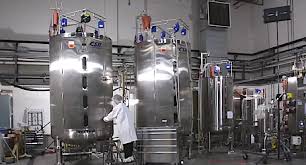
Upstream Processing initiates vaccine production by growing host cells or organisms to express antigens, a cornerstone of biopharma where yields can vary 10-fold based on media or strain. For vaccines like recombinant protein-based (e.g., HPV), it involves microbial or mammalian fermentation; for live-attenuated (e.g., measles), egg-based or cell-line propagation.
Core processes and elaborations:
- Cell Line Development and Banking: Master/working cell banks (MCB/WCB) cryopreserved per GMP, screened for adventitious agents to ensure genetic stability in CHO or Vero cells.
- Bioreactor Operations: Fed-batch or perfusion modes in 2,000-20,000L vessels, monitoring pH, DO, and metabolites via PAT (Process Analytical Technology) for optimal antigen expression.
- Harvest and Clarification: Centrifugation or depth filtration post-induction, recovering >80% biomass while minimizing shear damage to fragile virions.
- Scale-Up Strategies: From shake flasks to pilot, using DoE (Design of Experiments) to transfer processes without potency loss.
This department’s efficiency directly impacts downstream costs, with innovations like continuous perfusion boosting vaccine titers by 2-3x.
Downstream Processing: Purifying and Concentrating Antigens
Downstream Processing refines crude harvests into high-purity vaccine intermediates, removing host cell proteins, DNA, and impurities to <1% contaminants—vital for immunogenicity and safety in biopharma. Techniques are tailored to vaccine type, e.g., chromatography for subunit vaccines or tangential flow for viral particles.
Core processes and elaborations:
- Capture Chromatography: Affinity or ion-exchange columns to bind antigens selectively, achieving 10-20 fold purification in the first step.
- Viral Inactivation/Removal: Chemical (e.g., beta-propiolactone) or physical (nanofiltration) methods for live-virus vaccines, validated for >12 log reduction per ICH Q5A.
- Polishing and Formulation Prep: Size-exclusion or hydrophobic interaction chromatography, followed by ultrafiltration/diafiltration (UF/DF) to concentrate and buffer-exchange.
- In-Process Analytics: Real-time HPLC or ELISA for purity checks, ensuring compliance with release specs like >95% monomer content.
Yield recovery (60-80%) here is key, with single-use tech minimizing cleaning validation for agile vaccine campaigns.
Formulation and Filling: Assembling the Final Dose
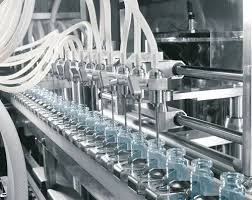
Formulation and Filling integrates antigens with adjuvants, stabilizers, and preservatives into stable, sterile doses, emphasizing cold-sensitive biopharma vaccines (e.g., mRNA in lipid nanoparticles). This aseptic stage occurs in ISO 5 cleanrooms, filling vials, syringes, or multi-dose formats.
Core processes and elaborations:
- Excipient Blending: Mixing with aluminum hydroxide adjuvants or sucrose cryoprotectants, pH-adjusted for stability (e.g., 6.5-7.5 for flu vaccines).
- Sterile Filtration and Aseptic Filling: 0.22 μm filtration pre-fill, using isolators or RABS (Restricted Access Barrier Systems) to maintain sterility assurance level (SAL) of 10^-6.
- Lyophilization (if applicable): Freeze-drying for heat-labile vaccines like MMR, with cycle optimization to preserve >90% potency.
- Capping, Labeling, and Inspection: Automated vision systems for defect detection, followed by 100% visual checks to flag particulates.
This department ensures dose uniformity, critical for pediatric or booster campaigns.
Packaging and Cold Chain Logistics: Protecting Product Integrity
Packaging and Cold Chain finalizes vaccines in secondary containers, integrating temperature-controlled shipping to preserve the cold chain from -80°C (mRNA) to 2-8°C (inactivated). In biopharma, it addresses global distribution challenges for equitable rollout.
Core processes and elaborations:
- Secondary Packaging: Blistering or cartoning with tamper-evident seals, including serialization for track-and-trace per DSCSA.
- Thermal Mapping and Validation: Qualifying shippers with data loggers, ensuring excursions don’t exceed thresholds (e.g., <8 hours at 25°C).
- Distribution Planning: Collaborating with logistics for just-in-time delivery, using predictive analytics for demand forecasting in outbreak scenarios.
- Sustainability Packaging: Eco-friendly materials like recyclable vials, aligning with WHO prequalification for low-resource settings.
Robust logistics prevent spoilage, as seen in maintaining vaccine efficacy during the 2020-2022 global rollout.
Integrated Key Processes and Future Outlook
Across sub-departments, overarching processes like technology transfer and batch record review ensure end-to-end traceability, with MES (Manufacturing Execution Systems) automating workflows. Vaccine-specific integrations include biosecurity protocols and rapid scale-up modules.
As biopharma advances with self-amplifying RNA or plant-based vaccines, production will harness modular facilities and gene editing for on-demand manufacturing. This trajectory positions production as the dynamic force propelling vaccine innovation, securing global health against emerging threats.